
Created on November 14th, 2026 at 08:30 am
Table of Contents
Introduction: Easter Carrot Cake
As Easter approaches, many of us start planning delightful desserts that will impress family and friends. One such treat is the classic Easter Carrot Cake with Cream Cheese Frosting. This cake is not only delicious but also brings a touch of nostalgia and warmth to your holiday table. Its moist and rich texture, combined with the tangy sweetness of cream cheese frosting, makes it a favorite for many.
Why This Cake is Perfect for Easter
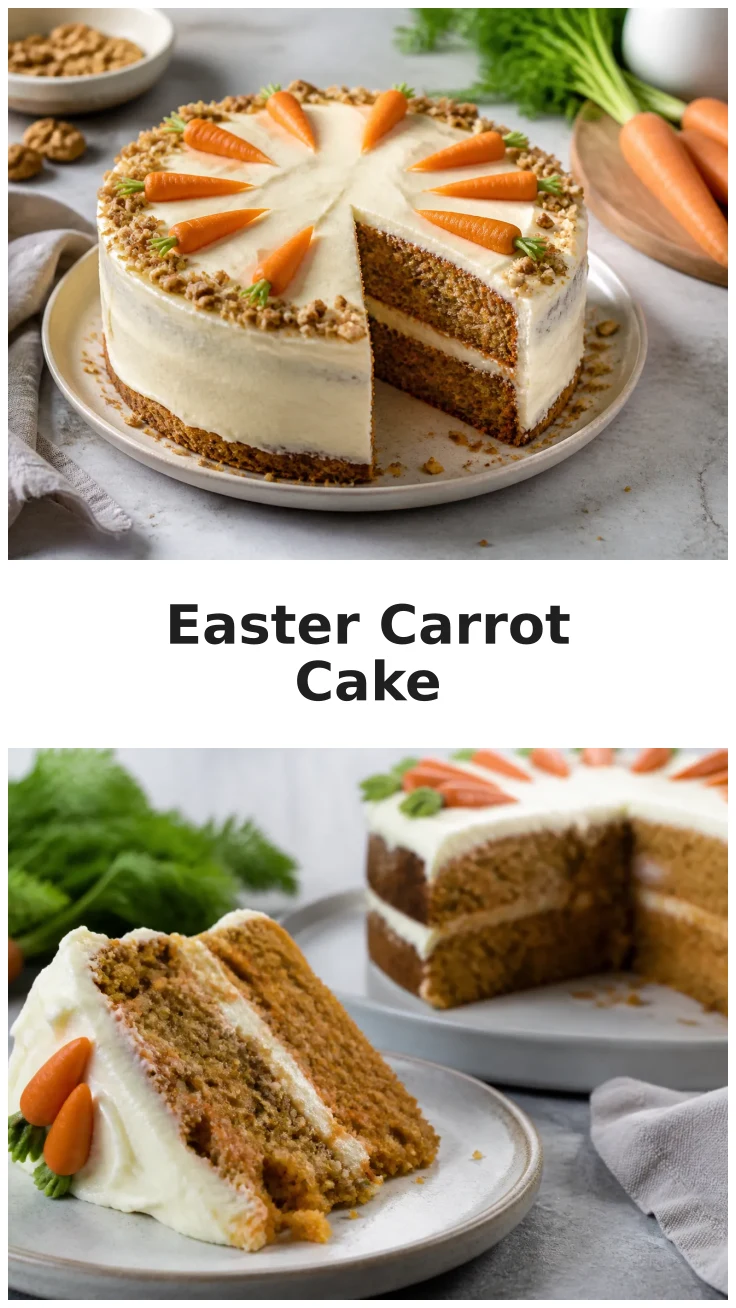
The Easter Carrot Cake is more than just a dessert; it’s a celebration of spring’s fresh flavors. The vibrant carrots symbolize new beginnings, while the warm spices remind us of home and comfort. Its elegant appearance makes it a centerpiece on any Easter table, and it’s an ideal choice for those who appreciate traditional, homemade desserts.
The History of Carrot Cake
Carrot cake has a rich history that dates back to medieval times when sweeteners were scarce, and carrots were used as a sugar substitute. Over time, this humble cake evolved into a beloved treat, especially popular in the United States. Today, it’s a staple in many households during spring celebrations, particularly Easter.

Love baking cakes like this one? 🎂
Get our newest cake recipes and seasonal baking ideas in your inbox every week. Free, no spam, unsubscribe anytime. See our Privacy Policy.
Ingredients
Creating a moist and flavorful Easter carrot cake requires a careful selection of ingredients. From the cake to the frosting, each component plays a crucial role in achieving that perfect taste and texture.
Essential Ingredients for the Cake
For the cake, you’ll need all-purpose flour, baking powder, baking soda, cinnamon, nutmeg, grated carrots, crushed pineapple, and chopped walnuts. These ingredients come together to form a cake that’s both moist and full of flavor.
Making the Cream Cheese Frosting
The cream cheese frosting is a perfect complement to the spiced cake. It requires cream cheese, unsalted butter, powdered sugar, and vanilla extract. The result is a smooth, creamy frosting that adds a touch of sweetness and tanginess to the cake.
Step-by-Step Instructions
Making an Easter carrot cake from scratch might seem daunting, but with these step-by-step instructions, you’ll be able to create a stunning dessert with ease.
Preparing the Cake Batter
Start by preheating your oven to 350°F. In a large mixing bowl, combine the dry ingredients, including flour, baking powder, baking soda, cinnamon, and nutmeg. In another bowl, beat the eggs and sugar until smooth, then add oil, vanilla extract, and grated carrots. Gradually combine the dry and wet ingredients, folding in the crushed pineapple and chopped walnuts.
Baking the Cake
Pour the batter into a greased and floured 9-inch round cake pan. Bake for 50 minutes, or until a toothpick inserted into the center comes out clean. Allow the cake to cool in the pan for 10 minutes before transferring it to a wire rack to cool completely.
Frosting and Decorating Tips
Once the cake has cooled, prepare the cream cheese frosting. Spread a thick layer of frosting over the top and sides of the cake. For a festive touch, consider decorating with additional walnuts or shredded coconut.
Pro Tips
Here are some expert tips to ensure your Easter carrot cake turns out perfectly every time.
- Grate the carrots finely to ensure they blend well into the batter, keeping the cake moist.
- Use fresh spices for the best flavor impact, as ground spices lose potency over time.
- If you prefer a nut-free cake, simply omit the walnuts or replace them with raisins.
- To add a citrus twist, incorporate a tablespoon of orange zest into the batter.
The most important tip is to let the cake cool completely before frosting. This prevents the frosting from melting and ensures a smooth application.
Love baking cakes like this one? 🎂
Get our newest cake recipes and seasonal baking ideas in your inbox every week. Free, no spam, unsubscribe anytime. See our Privacy Policy.
Serving Suggestions
This Easter carrot cake pairs beautifully with a variety of beverages and can be served on numerous occasions.
Pairing with Beverages
Consider pairing the cake with a cup of aromatic tea or freshly brewed coffee. For a special occasion, a glass of sparkling cider adds a celebratory touch.
Ideal Occasions for Serving
While this cake is perfect for Easter, it also makes a delightful addition to springtime gatherings, birthdays, or as a delicious treat for any family dinner. Its classic flavor appeals to all ages, making it a versatile choice for many occasions.
Nutritional Information
Understanding the nutritional content of your Easter carrot cake can help you enjoy it responsibly.
Calories and Macronutrients
Each slice of this moist carrot cake provides approximately 320 calories, with a balanced mix of carbohydrates, proteins, and fats. It contains 48g of carbohydrates, 5g of protein, and 13g of fat, making it a satisfying dessert choice.
Allergen Information
This cake contains common allergens such as wheat, eggs, and dairy. For those with nut allergies, ensure to omit or replace the walnuts with a suitable alternative. Always inform guests of the ingredients to accommodate dietary needs.


Moist Easter Carrot Cake with Cream Cheese Frosting

Equipment
- 1 9-inch round cake pan greased and floured
- 1 electric mixer
- 1 Mixing Bowl large
Ingredients
Dry Ingredients
- 2 cups all-purpose flour
- 1 tsp baking powder
- 1 tsp baking soda
- 1 tsp ground cinnamon
- 1/2 tsp ground nutmeg
Wet Ingredients
- 1/2 cup unsalted butter softened
- 1 cup granulated sugar
- 2 large eggs room temperature
- 1 tsp vanilla extract
- 2 cups grated carrots
- 1/2 cup crushed pineapple drained
- 1/2 cup chopped walnuts
Cream Cheese Frosting
- 8 oz cream cheese softened
- 1/4 cup unsalted butter softened
- 2 cups powdered sugar
- 1 tsp vanilla extract
Instructions
Preparation
- Preheat the oven to 350°F. In a large mixing bowl, combine the flour, baking powder, baking soda, cinnamon, and nutmeg. In another bowl, cream together the butter and sugar until light and fluffy. Add the eggs one at a time, beating well after each addition. Stir in the vanilla extract and grated carrots.
- Gradually add the dry ingredients to the wet mixture, stirring until just combined. Fold in the crushed pineapple and chopped walnuts.
- Pour the batter into a greased and floured 9-inch round cake pan. Bake in the preheated oven for 50 minutes or until a toothpick inserted into the center comes out clean. Allow to cool in the pan for 10 minutes before transferring to a wire rack to cool completely.
- In a mixing bowl, beat the cream cheese and butter until smooth. Gradually add the powdered sugar, beating until fluffy. Stir in the vanilla extract.
Serving
- Once the cake is completely cool, spread the cream cheese frosting over the top and sides of the cake. Decorate with additional walnuts or coconut, if desired.
Storage
- Store the cake in an airtight container in the refrigerator for up to 5 days. Allow to come to room temperature before serving.
Notes
Ingredient Substitutions: For a nut-free cake, replace walnuts with raisins or omit entirely.
How to Serve: Serve slightly chilled or at room temperature for best flavor.
Storage & Freshness: Keep refrigerated to maintain freshness for up to 5 days.
Make-Ahead Tips: Prepare the cake a day in advance and frost just before serving for best results.
FAQ
How can I make my carrot cake more moist?
To ensure your carrot cake is moist, use fresh grated carrots and incorporate ingredients like crushed pineapple or applesauce into the batter. These ingredients add natural moisture to the cake. Additionally, avoid overmixing the batter, as this can lead to a denser texture. Baking the cake at the right temperature and not overbaking will also help retain moisture.
Can I freeze carrot cake with cream cheese frosting?
Yes, you can freeze carrot cake with cream cheese frosting. It’s best to freeze the cake before it’s frosted or to freeze slices individually. Wrap the cake tightly in plastic wrap and then aluminum foil to prevent freezer burn. When ready to serve, thaw the cake in the refrigerator overnight and allow it to come to room temperature before serving. If the cake is already frosted, the texture of the frosting may change slightly, but it will still taste delicious.
Enjoyed this recipe? Leave a review!
There are no reviews yet. Be the first one to write one.

