
Created on November 14th, 2026 at 05:30 am
Table of Contents
Introduction: Easter Egg Cake
The Joy of Easter Baking
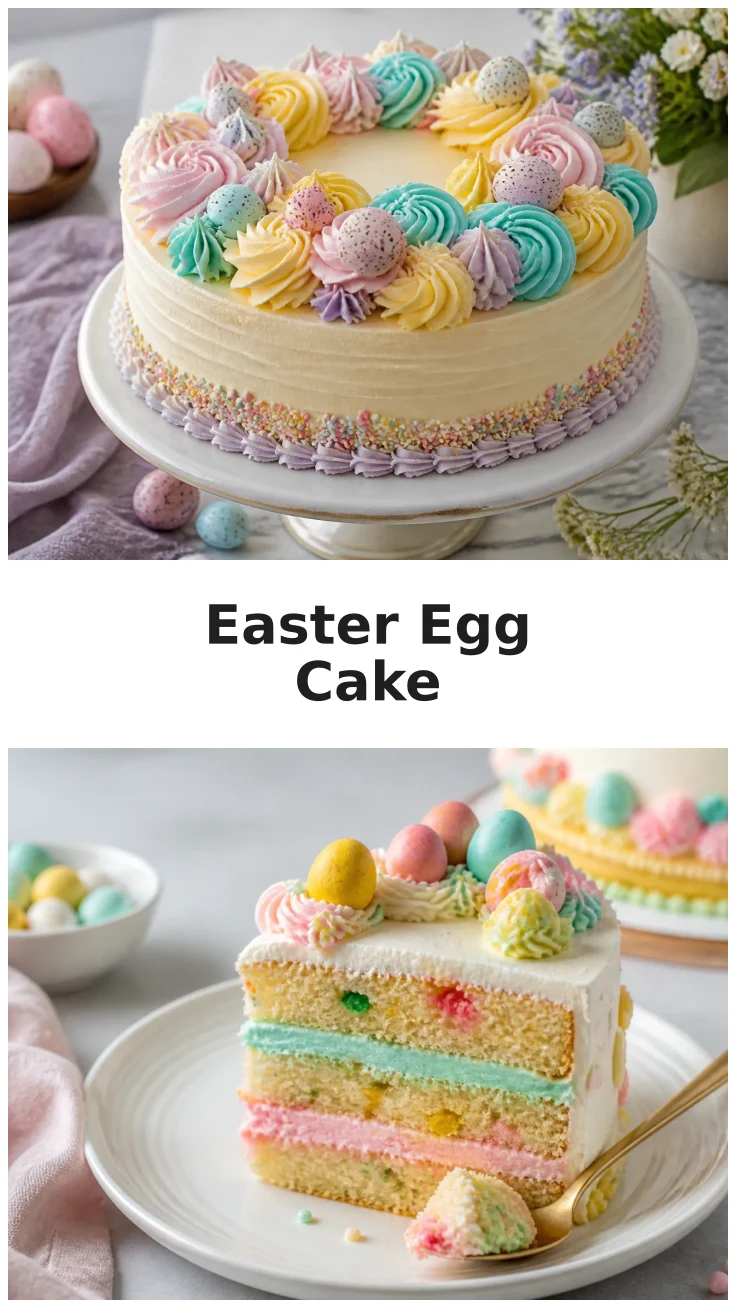
Easter is a time of joy, renewal, and delicious treats. One of the most delightful ways to celebrate is through baking. Crafting an Easter Egg Cake not only satisfies your sweet tooth but also brings a splash of color and creativity to your holiday table. This cake is a beautiful centerpiece that embodies the spirit of the season with its vibrant pastel frosting and egg shape.
Why Make an Easter Egg Cake?
Creating an Easter Egg Cake offers a unique opportunity to blend baking with art. The egg shape is symbolic of new life, and decorating it with pastel frosting creates a whimsical, eye-catching dessert that’s perfect for family gatherings or Easter brunch. It’s a fun project for bakers of all ages, and the end result is a deliciously moist cake that’s as enjoyable to eat as it is to make.

Love baking cakes like this one? 🎂
Get our newest cake recipes and seasonal baking ideas in your inbox every week. Free, no spam, unsubscribe anytime. See our Privacy Policy.
Ingredients
Essential Ingredients for the Cake
To create the perfect Easter Egg Cake, you’ll need a selection of classic cake ingredients. These include all-purpose flour, baking powder, unsalted butter, sugar, eggs, and vanilla extract. These staples come together to form a light, fluffy cake that’s easy to mold into the iconic egg shape.
Pastel Frosting Components
The pastel frosting is what truly sets this cake apart. To achieve the soft, springtime hues, gather ingredients such as butter, powdered sugar, milk, and food coloring. These will combine to form a smooth, spreadable frosting that can be tinted to any pastel shade of your choosing, allowing for endless creative possibilities.
Step-by-Step Instructions
Preparing the Cake Batter
Start by preheating your oven to 350°F. Cream together the butter and sugar until light and fluffy. Add the eggs one at a time, beating well after each addition. Stir in the vanilla extract. In a separate bowl, combine the flour and baking powder, then gradually add to the wet ingredients. Mix until just combined.
Baking the Cake
Pour the batter into a greased and floured 9-inch round cake pan. Bake for 25 to 30 minutes, or until a toothpick inserted into the center comes out clean. Allow the cake to cool in the pan for 10 minutes before transferring it to a wire rack to cool completely. For more cake inspiration, check out our Eggless Chocolate Cake.
Decorating with Pastel Frosting
Once the cake has cooled, it’s time to shape and frost. Carefully carve the cake into an egg shape using a serrated knife. Prepare the pastel frosting by beating butter until creamy, then gradually adding powdered sugar and milk until smooth. Divide the frosting into separate bowls and tint each with your choice of pastel colors. Spread the frosting over the cake, using a spatula to create smooth, even layers.
Pro Tips
To make your Easter Egg Cake truly stand out, consider these pro tips. Achieving the perfect pastel color requires patience and a light touch with food coloring. Here are some additional tips to ensure success:
- Start with a small amount of food coloring and gradually add more to reach the desired shade.
- Use a serrated knife for a cleaner cut when shaping the cake into an egg.
- Chill the cake before shaping to minimize crumbs and make it easier to handle.
- For a smooth frosting finish, dip your spatula in warm water before spreading.
Remember, the key to a beautifully decorated cake is patience. Take your time with each step, especially when it comes to coloring and smoothing the frosting. For additional decoration techniques, you might find inspiration from our Strawberry Heart Cake.
Love baking cakes like this one? 🎂
Get our newest cake recipes and seasonal baking ideas in your inbox every week. Free, no spam, unsubscribe anytime. See our Privacy Policy.
Serving Suggestions
Pairing with Easter Treats
This Easter Egg Cake pairs wonderfully with other holiday treats like Easter Spring Cupcakes or a delightful Carrot Cake Cookies Easter Dessert. Serve your cake as part of a festive dessert buffet, surrounded by an array of colorful confections.
Presentation Ideas for Easter
Presentation is key to making your Easter Egg Cake the centerpiece it deserves to be. Consider placing it on a decorative cake stand and surrounding it with fresh flowers or small chocolate eggs for an added touch of Spring. A light dusting of powdered sugar or edible glitter can also enhance its visual appeal.
Nutritional Information
Calories and Macronutrients
Each slice of this delightful Easter Egg Cake contains approximately 320 calories, with 48 grams of carbohydrates, 5 grams of protein, and 13 grams of fat. While it is a treat meant for special occasions, you can enjoy it knowing that it fits perfectly within a balanced celebration meal.


Colorful Easter Egg Cake with Pastel Frosting

Equipment
- 1 9-inch round cake pan greased and floured
- 1 electric mixer
- 1 Mixing Bowl large
Ingredients
Dry Ingredients
- 2 cups all-purpose flour
- 1 tsp baking powder
- 1/2 tsp salt
Wet Ingredients
- 1/2 cup unsalted butter softened
- 1 cup sugar
- 2 large eggs room temperature
- 1 tsp vanilla extract
- 1/2 cup milk
Pastel Frosting
- 1 cup unsalted butter softened
- 4 cups powdered sugar
- 1/4 cup milk
- Food coloring assorted pastel colors
Instructions
Preparation
- Preheat the oven to 350°F. Cream the butter and sugar together until light and fluffy. Add the eggs one at a time, beating well after each addition. Stir in vanilla extract. In a separate bowl, combine flour, baking powder, and salt. Gradually add the dry ingredients to the wet ingredients, alternating with milk, until just combined.
- Pour the batter into a greased and floured 9-inch round cake pan. Bake for 25-30 minutes, or until a toothpick inserted in the center comes out clean. Allow the cake to cool in the pan for 10 minutes before transferring it to a wire rack to cool completely.
- Once the cake is completely cool, use a serrated knife to carefully carve the cake into an egg shape. This step requires patience and a steady hand for the best results.
- Beat the butter until creamy. Gradually add powdered sugar and milk, beating until smooth and creamy. Divide the frosting into separate bowls for each color you plan to use. Tint each portion with a drop or two of food coloring until the desired pastel shade is achieved.
- Spread a thin layer of frosting over the entire cake to act as a crumb coat. Chill for 15 minutes to set. Apply the remaining frosting, starting with the base color and using additional colors for decorative accents. Smooth the frosting with a spatula dipped in warm water for a professional finish.
Serving
- Slice the cake into 8 pieces and serve as a stunning centerpiece dessert. Pair with other Easter treats or enjoy on its own as a sweet finale to your holiday meal.
Storage
- Keep any leftover cake covered in an airtight container at room temperature for up to 2 days, or refrigerate for up to 5 days. Bring to room temperature before serving for the best texture.
Notes
Ingredient Substitutions: Substitute almond extract for vanilla for a nutty twist. Use dairy-free milk and butter for a vegan version.
How to Serve: Present the cake on a decorative stand with fresh flowers or Easter-themed decorations for an added festive touch.
Storage & Freshness: To maintain freshness, wrap the cake tightly with plastic wrap or store in an airtight container.
Make-Ahead Tips: Bake the cake a day ahead and frost on the day of serving to save time during busy holiday preparations.
FAQ
How can I make the pastel frosting more vibrant?
To achieve more vibrant pastel colors, start by using a concentrated gel food coloring, which offers more intensity with less liquid. Add the coloring gradually, mixing thoroughly after each addition, until you reach the desired hue. Remember, the colors will appear slightly lighter once applied to the cake, so aim for a slightly darker shade in the bowl.
Can I make this cake ahead of time?
Yes, you can prepare the cake a day or two in advance. Bake the cake and allow it to cool completely before wrapping it tightly in plastic wrap. Store it at room temperature or in the refrigerator. You can also prepare the frosting ahead of time and store it in an airtight container in the refrigerator. When ready to use, let the frosting soften at room temperature for easier spreading.
What other decorations can I use for this cake?
Beyond pastel frosting, consider using edible flowers, sprinkles, or small chocolate eggs to embellish your Easter Egg Cake. These additions can enhance the cake’s visual appeal and tie in with the spring theme. You can also pipe additional frosting details, such as stripes or polka dots, for a fun and festive look.
Enjoyed this recipe? Leave a review!
There are no reviews yet. Be the first one to write one.

